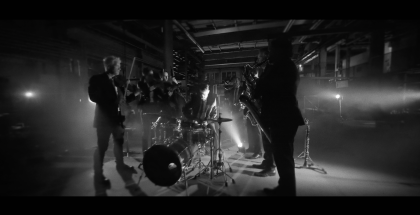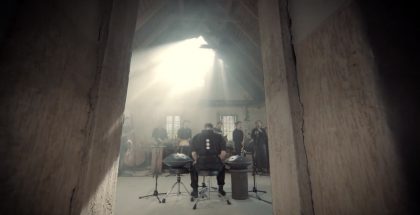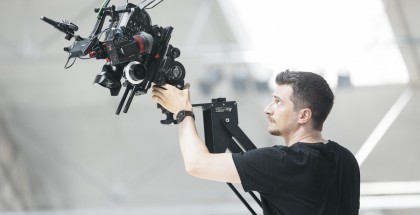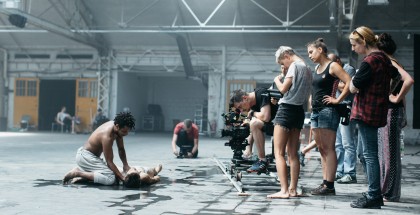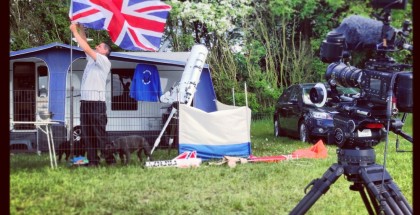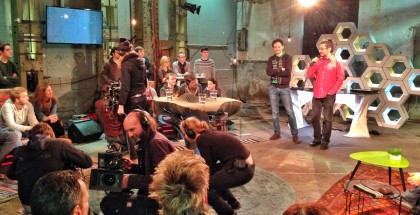
This is something I meant to blog about literally forever, so here it is, finally. People who follow me on Twitter regularly might already be aware of this. This is about an amazing experience we made with a viral self-marketing campaign. First of all, check our video out, and then read and most importantly WATCH our “revelation” at TEDxVienna.
Rodney Charters says the Canon C300 is the "camera of the decade"
I witnessed the live stream yesterday and thought this was worth sharing:
If you ever wanted to hear what a well-established Hollywood DP thinks about the upcoming C300, look no further: Rodney Charters, director of photography best known for his incredible work on the TV series “24″ (here’s his IMDB profile), had a go with the C300 together with Lan Bui and Drew Gardner, both highly talented filmmakers in their own rights.
Disclaimer: This is not a scientific test. We have had the chance to test the two cameras at the same location but different dates and with different lenses and decided to compare them to get a rough feel for each cameras low light sensitivity.
Over the past months, I have been given the chance to so something quite ordinary with extraordinary people: shooting interviews for TV and other media outlets – interviews with famous film stars and film directors. As you can imagine, there is hardly any room for screwing up something like this, so the preparation needs to be meticulous.
Still frame from my interview shoot with David Cronenberg for the Austrian premiere of "A Dangerous Method" at the Viennale International Film Festival - parts of the film were shot in Vienna, where Sigmund Freud used to live
Red Giant software was busy developing a version of their very popular Magic Bullet Looks suite for Apple’s controversial and not-yet-quite production-ready Final Cut Pro X.
In case you missed it, I wanted to let you know that the incredible Automatic Duck plug-ins are now available for free.
Automatic Duck supplies plug-ins to allow round-trips between Final Cut Pro 7, Avid, After Effects or Pro Tools. It’s an incredibly useful array of tools if you have ever had the problem of moving your Final Cut Pro timeline into After Effects to do color grading or any post production work.
Every now and then, a disruptive company comes along that just does what everybody was hoping for – simply because it could be done – and thereby disrupts an entire industry.
Canon announced their long-anticipated new EOS C300 Super 35mm video camera. Finally Canon is directly aiming at professional video production with a need for cinematic images.
Gregor Schmidinger is the director of “The Boy Next Door”, a short film that garnered a whopping 2 million views in less than 3 years. Incredible success for a short film, certainly because Gregor managed to evoke a lot of emotions with the story about a male prostitute longing for real affection.
In case you have missed it, read Gregor’s great guest blog series “How to Reach a Million Video Views” in which he deals in detail with the strategy and the blueprint for a viral success such as “The Boy Next Door”.
With great sadness we all have learned of Steve Jobs’ death at the age of 56. He was my one true idol since I was a kid. I have never used anything else than Apple computers.
I know this isn’t usually the blog for such things, but I will take my time to collect my thoughts and write something more extensive on Steve Jobs’ death.
For now, I urge anyone to watch the extremely inspiring speech that Steve Jobs delivered in 2005 at Stanford University. I have watched it again and again over the years and I have hardly ever seen another speech as inspirational as this one.
If you have already seen it – watch it again.
The world has lost somebody who has made an enormous impact. You will be missed, Steve.
In case you started building up a collection of great Canon lenses after you purchased your video capable DSLR, and later decided that it’s probably time for one of the new large sensor camcorders (F3, FS100, AF101 …), you probably found yourself in a similar position as I.
What’s the problem?
Well, fast Canon EF lenses definitely are great, but their biggest drawback is that they control the aperture electronically, not mechanically on the lens (as most Nikon lenses do). That means you need to use a camera to control the iris. Not any camera. A Canon of course. EF is a proprietary standard, and Canon has not released the specifics as to how this communication between the lenses and the camera work.
I know, I know, our Cam Busters workshop tour through Germany and Austria with Philip Bloom, Sebastian Wiegärtner & me has been over for quite a while now, so I am really sorry for the late wrap-up post. Been very busy with some great new stuff on the horizon, but more on that some other time.
It was incredibly intense fun, meeting a lot of people and different crowds across the two countries, and the overall response to the workshops was extremely positive.
The three of us not looking so fresh anymore after the last workshop! (Berlin)
As you might already have heard, Engadget was sent an invite from Canon to a November 3 event in Hollywood, dubbed with the headline “The Story Begins – Canon is making an historic global announcement”.
Pretty mighty words, but of course promising. We have all been waiting for any news on Canon’s DSLR line-up for years now (I mean it, because there was no innovation in sensor technology since the introduction of the 7D over two years ago).
I usually don’t often feature other people’s works on my blog, but when I find something particularly worth pointing out, I do – and this is the case with the “Tour de Cure” documentary:
Recently, Linda Ung and Mick Jones, two very talented filmmakers and shooters from Australia who I had the pleasure to meet in person at this year’s NAB in Las Vegas, set out to make an incredible documentary series about the “Tour de Cure“. It’s a ten-day cycling tour aimed at raising money for cancer research and ultimately finding a cure for cancer. Please donate at Tour de Cure website to help reach this aim: http://www.tourdecure.com.au/
Before you read further, I suggest you start by watching the first episode. The other episodes are at the bottom of this post.
My apologies for the lack of blog posts lately, but the weeks after our Cam Busters workshop tour have been filled to the brim with work and therefore I’ve been too busy to do anything else. A round-up blog post about the Cam Busters tour will be posted in the coming days.
IBC 2011 in Amsterdam is around the corner. Right after NAB, it’s the most highly anticipated professional broadcast event of the year. It’s Europe’s NAB, so to speak.
I wrote this post originally for OMM! – the Open Media Magazine, a new iOS publication by talented young filmmaker/designer Daniel Freytag, who asked me to contribute to his first issue. It’s definitely worth checking out, it’s absolutely free for your iPhone and iPad, and the design and interface is very innovative and fitting to an iOS device. There are many other great articles included, among them one by my friend Mario Feil, who actually talks about why film schools were unnecessary for him
Future versions of the magazine will be web based and therefore available on all devices.
I love the community that has sprung up around the revolution of DSLRs in recent years. The accessibility of cameras delivering a cinematic quality for low budgets has opened up opportunities to almost anyone interested in becoming a filmmaker. People who used to feel excluded from what used to be an elitist profession now have a better chance of making it simple because the gear is cheaper and quickly becoming ubiquitous.
And here we go, the 2nd episode of our gear review show GEARAMA is online!
This time we talk about the Cinevate Simplis Dual (or Pro, how it’s called with the Cyclops viewfinder included) DSLR rig. In case you missed the first episode, check it out here - we talked about the Cinevate Cyclops DSLR viewfinder.
For our incredibly successful HDSLR/AF101 Masterclass in Majorca in June, we had some really generous sponsors who supported us along the way.
Three of them were so generous that they actually donated equipment to be given away to participants.
Philip, Sebastian and I did not want people to compete for these prizes with their filmmaking on the three-day course, because we figured that would distract them from actually learning things – and that’s what a Masterclass is all about in the end. We did a random prize drawing on the last day, and Philip Bloom picked all the winners.
Last week I returned from our 2nd 3-day HDSLR / AF101 Masterclass in Majorca. Sebastian Wiegärtner & me did the first one last September, which was a great success, and so we got our friend Philip Bloom on board for the first time this year in June. We had around 30 attendees and it was sold out over 8 weeks ago. The great thing about a three-day workshop is that people can actually get to know each other and shoot a short film under our supervision. You are essentially able to shoot a short with Philip Bloom (and us) prying over your shoulder, giving you tips and ideas on how we would approach a shot or scene like that.
Before I get too much into detail already: I will be doing a separate blog post on the Masterclass shortly, we are just waiting for all of the 6 shooting teams to put their finished short films (which they planned, shot and edited in less than 24 hours during the Masterclass) on Vimeo. Once they are up, I am going to present you an extensive round-up of everything that happened during the Masterclass.
I am very happy to announce that Sebastian Wiegärtner & I are going to bring the one and only Philip Bloom for the first time to Austria and Germany for a workshop tour with the three of us.
As most of you might already have heard, Zacuto has released a new electronic viewfinder (EVF) for use with your DSLR cameras or any other cameras with an HDMI connector.
It deals with the introduction of the new operation management strategy of the public railway system in Austria. The target audience are outsiders who are interested in the inner workings of the infrastructure branch of the ÖBB, for example applicants for positions.
Around 70% of the film were shot by me, the rest was archive material shot by Filmquadrat GmbH (they also did all the aerial shots). To match all the archive material in XDCAM EX, we shot on a Sony EX3.
Directed, shot & edited by Nino Leitner.
Big thanks to all the assistants involved in this production.
An unknown dancer, my sound guy Andreas Pils, me, & the line Producer Anna Kwak
I have been looking forward to this for quite a while, and Sunday May 29th is the day: The French/German broadcaster ARTE will screen the 90-minute documentary “À chacun son bal” (French title, something like “To each their ball” in English) or “Alles Walzer” (German title, something like “Let’s waltz” in English), in which I was lucky enough to be one of the three cinematographers alongside Xavier Liberman and Alexander Boboschweski. The documentary, directed by Barbara Necek, deals with the Viennese tradition of dancing balls. For more details on the documentary please read the English description below.