






UPDATED with short film “FEBRUARY” – Canon EOS 550D / Rebel T2i review (pre-production model)
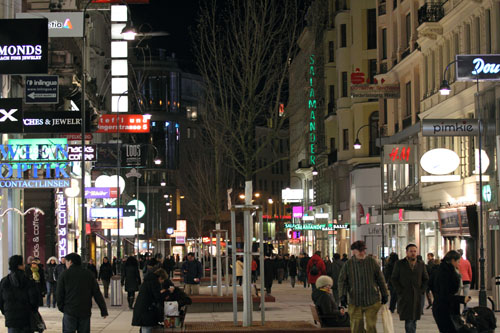
Check out my new short film, “FEBRUARY”, entirely shot on the Canon EOS 550D / Rebel T2i (pre-production model)!
I used NO GRADING, just the “flattened” picture preset, and shot mostly at ISO100 (day) & ISO1600 (night).


Check out the new COLOR GRADED version of this short here.
Shot in 1080p at 25fps, except for the slow-motion sequences, they were shot in 720p at 60fps and later reconformed to 25fps using Apple’s CinemaTools.
You can watch this short in 1080p “Full HD” too, over here on YouTube: http://www.youtube.com/watch?v=5xfEw2P6M10 – just make sure your computer is powerful enough as this is quite demanding.
Music:
“Living Waters” by Philip Glass from the The Truman Show (MP3 Download)


Lenses used:
Canon EF 70-200mm f/2.8L IS USM Telephoto Zoom Lens
Canon EF-S 18-55mm f/3.5-5.6 II Lens

I used this really cheap – but quite heavy – tripod setup for all of the tripod shots in the film above. Watch out for a review of this tripod here on the blog soon. Have been using it for over 8 years now, nothing comes close regarding price if you want something stable that performs well in windy situations, or if you need to go really high!
Before I start drooling over this new camera from Canon, I have to tell you that I am relatively new to the whole HDSLR field.
Over 14 months ago, I was doing detailed research on what HD camera to buy – I needed a real workhorse for “real” commercial jobs, for many of which a DSLR camera is just not suitable. Also, at that time, only the 5Dmark2 with its 30 fps recording was available, and that was of course unacceptable (I live in Austria, and of course it’s a PAL country like the rest of Europe).
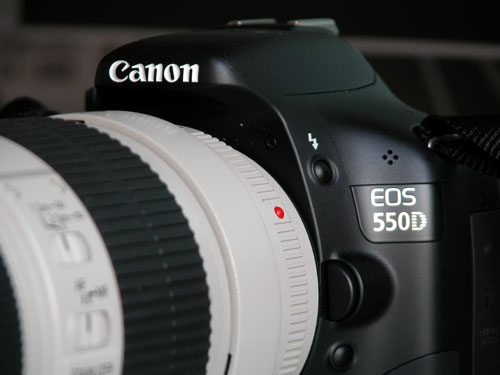
Canon EOS 550D
I went with the EX3 and have never regretted that choice. It has enabled me to do lots of great work so far – work which would just have been impossible to do with my old Panasonic DVX100A, which served me well for over 7 years.
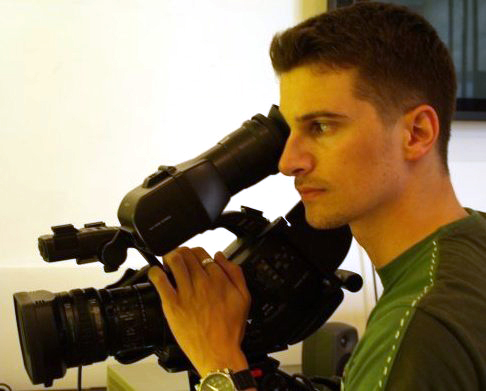
That's me with my EX3 (photo by Stefan Fleig)
Nevertheless, I always – of course, like everybody else – was striving for a filmic look on some jobs and projects. At that point already I decided that a DoF adapter like e.g. a Letus wasn’t the way to go for me. I don’t want to loose more light and is an overall too bulky setup to use on a regular basis. It might be true that the overall quality of images shot with these adapters is still a bit more “organic” than DSLR footage, but the bulkiness just won’t allow you to shoot much of the stuff you’d be able to shoot with a DSLR for exactly three reasons:
Size, weight and light sensitivity.
To make a long story short: I decided a while ago that I needed an additional camera for a different purpose to supplement my EX3 setup. And I think I might have waited long enough with the purchase – because I just found my future camera with the new Canon EOS 550D (or Rebel T2i, how it’s called in the US).
Thanks to a friend who’s working for an Austrian IT magazine, I was able to get my hands on this new sensation early. After he tested the camera, I was also given the opportunity to have a close look at it and shoot some test footage.


I have to mention that this is a pre-production model – Canon explicitly told us that there might be some changes until its final release. Nevertheless, looking almost exclusively at the video mode, I found nothing to enhance on the firmware (I have version 1.0.3 on the model right here). I also heard that this camera will start shipping this or next week already, so what I have in hand might be close to the final thing.
So why exactly is it a sensation?
This one is easy to answer: Without having a 7D here to do a side-by-side comparison, it delivers a very similar video picture to the Canon 7D in practically every video mode. It offers all the frame rates the 7D offers: 1080p24, 1080p25, 1080p30, 720p50 and 720p60.
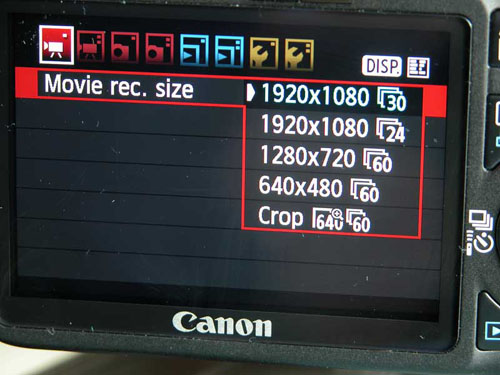
550D NTSC movie resolution & framerate options
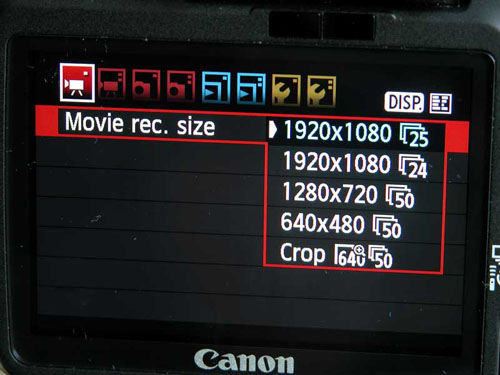
550D PAL movie resolution & framerate options
It offers an HDMI port, a mike-in port, and even an autofocus mode for video (!) which isn’t always as useless as you might think, because it only focuses when you slightly press the release button, just like in photo mode (and you can calibrate the autofocus matrix the way you like – by the way, it uses the same autofocus system the 7D uses as well). I wasn’t able to test the resolution the HDMI port delivers, sorry for that – I know this is important, but somebody else will have to check this out as I already had to return the camera.
EDIT: Zak Melms commented on Vimeo the following regarding HDMI:
“In case folks are wondering, no HD output when recording, and no clean video signal either, it drops out for a second when you start and stop and when you arent recording you get all of the display controls.”
EDIT on March 2, 2010: Jay Friesen has taken a detailled look on HDMI with the Rebel T2i / 550D – you have to check this out!
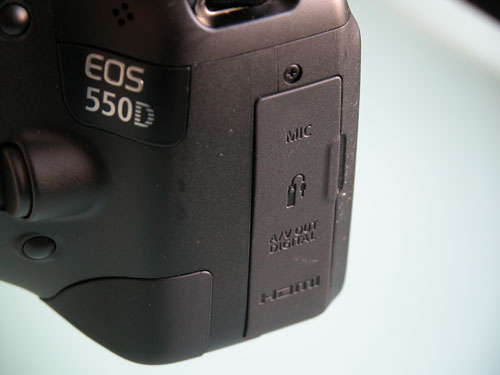
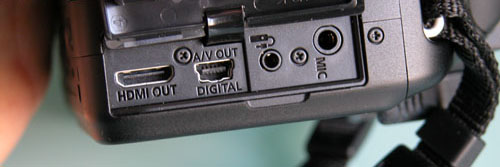
Just like the 7D, the 550D uses a sensor that delivers 18 Megapixels (17.9 to be exact, 5184 x 3456 pixels) in photo mode, which isn’t irrelevant for video mode: because of this same resolution the images are – at least to my eyes, as I said – indistinguishable to video images from a 7D. BUT Canon pointed out that it is NOT the same sensor! Unfortunately I don’t have a 7D to borrow to do a side-by-side comparison in the field, this is up to somebody else. I am very curious if somebody can note any difference performance-wise. From what I’ve seen shot on a 7D, I certainly can’t see much difference. There might be a little more grain at 1600 ISO, but I can’t say that for sure – might have been circumstantial when I shot yesterday (lots of fog).
That is of course also true for the “disadvantages” of the 7D: The picture is considerably less “sharp” compared to the 5Dmk2 or a “real” FullHD camera like the EX1 or EX3 (probably a mathematical problem resulting from the necessary line-skipping in the sensor which has a much higher resolution than the necessary 1920*1080), and of course there’s sometimes bad aliasing. Check out Stu Maschwitz’s blog on that matter to find out more.
The LCD screen is super-crisp. In fact – 7D owners won’t like to hear this – according to the specifications it has even a slightly higher resolution than the 7D (10% better): the 550D sports a 3 inch display with approx. 1.04 million pixels, while the 7D has a display of the same size with 920.000 pixels!

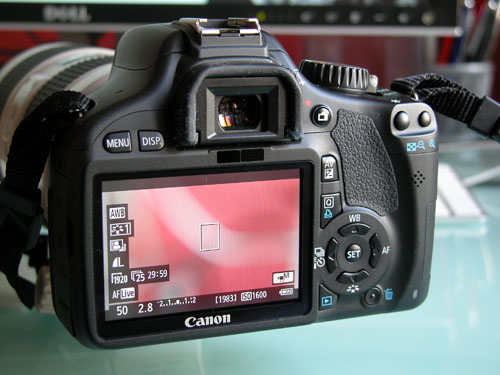
The 550D uses slower internal processing than the 7D, which means you can only shoot 3.7 images per second in photo mode (compared to 8 on the 7D). I think this difference is irrelevant to movie modes, at least I didn’t find any limitations while I was out shooting. Just like on the 7D, 1080p recording is limited to 12 minutes per take.
ADDED on March 4, 2010:
I clarified the 12 minute recording issue with Canon today, once and for all. We were told that the real reason for the 12 minute recording limit is – as many have said for a long time – the FAT32 format on the card. The FAT32 file system has a maximum file size of 4GB which equals 12 minutes of 1080p. Canon simply has no technology in place that allows the seamless linking of the files, therefore enabling the cameras to record seamless takes that span over multiple 4GB files. We were told that this recording limit has nothing to do with overheating or other issues.
It’s weird Canon still doesn’t seem able or willing to fix this with a simple firmware update – other cameras like the XDCAM EX line by Sony are recording in FAT32 too, but they have proper technology in place to allow continuous recording. The files are later even joined by the software when you transfer the footage from the cameras onto your computer.
There is one thing in particular which shows that Canon is really trying to dominate the market for HDSLR shooters in the long run: They didn’t employ a lower bitrate, something which many – and maybe rightfully so – were fearing at first. It offers the same 44-45 MBit a second as the 7D. You really get the idea here that Canon always seem to built into the camera what’s technologically feasible at the moment, not what their marketing department would probably prefer (I’m looking at you, Panasonic GH1).
With its higher bitrate and a multitude of frame rates and resolutions, the 7D was a big step up from the 5D, albeit of course with a smaller sensor and the resulting loss of light sensitivity and the resulting increase in focal length (1.6 increase, same with 550D). With less and cheaper components, they were obviously able to give us practically the same thing with the 550D.
Now, the $800 550D is in some ways more versatile than the $2.500 5Dmk2!
(A firmware update for the 5Dmk2 adding the new framerates was announced long ago, but people are still waiting for it to arrive.)


By the way, rolling shutter is of course just as bad as on the 7D – but I think not as bad as on the 5Dmk2 (again, probably because of the smaller sensor).
The same-sized processor also results in a comparable sensitivity as on the 7D as far as ISO are concerned. I shot most of the night scenes in the test short at ISO 1600, which to me is the maximum tolerable amount of grain. As Philip Bloom has pointed out on the 7D, at 3200 ISO it starts getting really nasty. However, when I shot some tests last night in thick fog, you could see quite heavy grain even at 1600 ISO – see above by the end of my short “February” for these shots.
By the way, the Rebel T2i / 550D is somewhat limited in choosing ISO levels: you only get 100, 200, 400, 800, 1600, 3200, whereas with the 7D and 5Dmk2 you can also choose from 160, 320, 640 etc.
I tested the 550D with the Kit lens, which is also the same as on the 7D (EF-S 18-135mm f/3.5-5.6 IS). As you probably know, this is not a professional lens, but it is an exceptional value for just $300, and good enough for many keen amateurs who’re not looking to create the perfect film look. But don’t expect that lens to perform well in the dark.
To really get to the potential of this camera, you have to use a really fast lens to be able to shoot at low-light and with a very shallow depth of field because of a wide open iris. We were given the Canon EF 70-200mm f/2.8L IS USM, a lens worth twice as much as the camera. With the 1.6 increase in focal length this equals to roughly 110-320mm on 35mm.
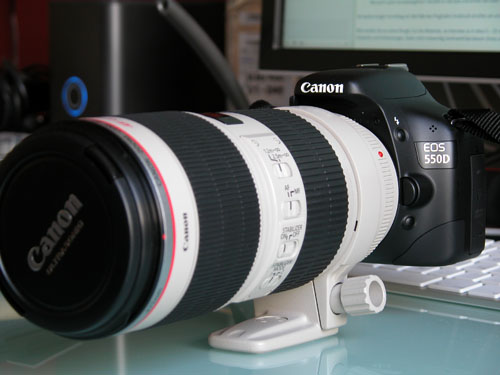
Effectively this means that I was running around with something like a shotgun, mostly shooting hand-held without much support (my soon-to-be-replaced Manfrotto tripod is just to inconvenient to carry around for a long time, might finally have to go for Philip Bloom’s beloved Miller DS-20 or even a new Sachtler Speedlock with a FSB-8 head).
So please bear with me if there are some shaky shots in my demo short film. I can guarantee you, it’s not the camera, it’s me :-).
As far as handling and workmanship of the 550D are concerned, there are of course differences to the 7D (they have to start somewhere!). The form factor is exactly the same as on its not-quite-HD-shooting predecessor, the 500D, and it has the same “plasticky” feel to it. There is no weather proofing like on the 7D, and it is considerably lighter (which is not particularly a good thing for steadiness). The 7D is 820 grams body-only, while the 550D weighs only 475 grams. That’s almost half the weight!! So don’t take a leaf out of my book and get some good support for shooting with this camera!
The menu button layout is somewhat different from the 7D, but still quite comfortable for filmmakers. You have to switch to movie mode using the upper dial, Live View automatically turns on. The Live View button right next to the screen is therefore becoming the record button in movie mode. It is on the exact same position as the movie switch on the 7D.
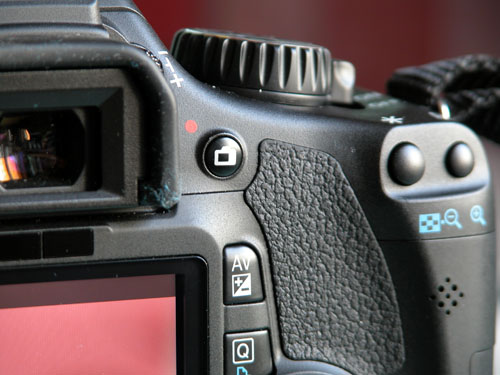
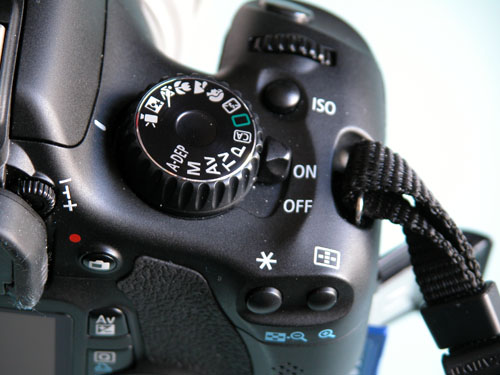
Contrary to the other cameras, the 550D records to SD and SDHC cards. Which is great for me, because I have a legion of Transcend 16 GB Class 6 SDHC cards
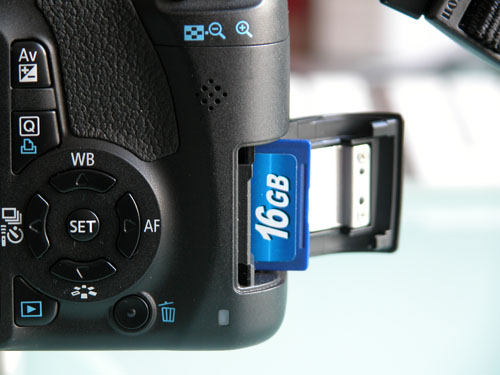
Personally, I think this camera will be another game changer, making “the film look” a ubiquitous commodity. Of course, cheap gear won’t create good filmmaking skill, but now even more young and aspiring filmmakers will have access to these tools, which will enable them to train their skills at an earlier age just because of the low price of the camera.

550D at 1600 ISO (video still frame)

550D at 100 ISO (video still frame) - somebody with a 7D photographed with a 550D - oh, the irony!
Quite oddly, you can now hear the huge broadcast accessory industry moan – their prices haven’t really dropped much despite comparatively cheap HDSLRs have been available for a while now, and they keep saying that good quality has its price. That is of course true – but it is also true that producing in higher volumes would enable them to drop prices significantly in most cases, reaching a much wider audience. In the end this will most likely also lead to much higher profits. It’s unjustifiable to go out, buy and stick a loupe for half the price of the camera itself onto the 550D. This is not simply not sustainable and most of the 550D buyers won’t even consider buying one.
550D at 1600 ISO (video still frame)
These companies should look at what Canon themselves are doing: They are giving their entry-level DSLR the very same video features as its big brother, the 7D. They sure will make tons of money of it. The lower the price, the more people will be able to afford it – and most of these future buyers wouldn’t ever have bought a $1.700 7D for sure. Just my 2¢ on that whole accessory prices matter.
My verdict is simple: BUY THIS CAMERA. For this price, I can hardly think of any reason not to get the Canon 550D / Rebel T2i. And if you already have a 5D or 7D, this is the perfect back-up camera.
I pre-ordered mine already, and I think it will sell like hotcakes – I do think they will definitely run out of those quite early if the demand is as high as I think it is!!
If you plan on buying the 550D / Rebel T2i and want to support this blog in order to keep those reviews coming, I’d appreciate it if you buy through one of these Amazon links (US store, UK store and German store). Greatly appreciated!!!
EDIT:
Upon popular request, I have uploaded a short RAW FOOTAGE CLIP straight off the camera, you can download it from here:
http://www.megaupload.com/?d=X46QO1ON
Also, I did a ROLLING SHUTTER TEST that you can watch right here:
As you can see, it’s really bad – which is unfortunately perfectly normal for cameras with a CMOS chip and HDSLRs in particular.
PHOTOGRAPHY with the 550D / T2i:
And for those also interested in taking PHOTOS with this camera (like me), here are some samples in full resolution (converted from RAW – can’t post the RAWs just yet because you won’t be able to open them in any editor, the format is too new!):

Canon 550D photo sample 1 - ISO 100 - me looking very strangely at the camera!
Canon 550D photo sample 2 - ISO 100

Canon 550D photo sample 3 - ISO 1600
EDIT:
Orange Wedding Films put up a side-by-side comparison between the video mode on the 7D and the T2i / 550D:
Philip Bloom compared low light capabilities of the 7D and T2i / 550D:
Check out Philips blog for his further thoughts on the new camera.
It’s great that my test film “FEBRUARY” was featured on Engadget – thank you all for the overwhelming response!!

Related Posts
Canon Rebel T3i / 600D unveiled The Devil is in the Details... February 7, 2011 | Nino Leitner
Apple Store workshop tour (Europe) – Commercial Filmmaking... April 25, 2014 | Nino Leitner

My thoughts on the new Canon EOS 60D & Canon L lenses... August 26, 2010 | Nino Leitner
Föger – furniture dealer job recruitment TV ads... December 23, 2010 | Nino Leitner
Canon 70D announced & why this camera really matters... July 2, 2013 | Nino Leitner
What’s special about the Filmmaking Masterclasses 2012 & why this mig... April 2, 2012 | Nino Leitner

Beach Cycle: Timelapsing on the French Riviera... August 24, 2010 | Nino Leitner

Epic DSLR Viewfinder Review Part 5: Essential DSLR accessories... July 1, 2010 | Nino Leitner
-
Thank you for a very informative and un-biased review. I also want to commend you for your near-perfect grammar and punctuation – you put the majority of Americans (me excepted, of course) to shame.
-
finally a good review! cheers
-
Heya Nino!
Cheers for keeping us updated on the camera – the footage looks great, I’m sold!
John
-
Nino – you should still get a PC though 😉
-
Fantastic! I want one…
-
Thanks so much for this first look. Do the video files have the .264 extension, or .mov? Could you post some raw files at 1080p?
-
Excellent review, I think you’ve covered a lot of very good points and I totally agree that this is the new HV20 but with bells on. And true, no more excuses, you either have talent or you don’t and the 550D will show this.
-
Good review
-
Just to let you know … the Canon EF-S 18-135mm is f/3,5-5,6 not f/5-5,6 😉
-
thx for that in depth preview … so ist a great “HD-DSLR-newcomer” Cam is guess worth the buy anyway … 🙂 cant wait to see more footage … have to say this could really be my first own Canon HD-DSLR 🙂 … we will see
-
great review sir!
but i’d really like to know the exact SDHC card you’re using, brand name, class and capacity.
and how long will this card capture full HD 1080p25? still 12minutes?
thanks! -
Thanks for the informative review, and the amazing looking footage.
I was amazed until I realized I was watching in SD, then switched over and became double amazed!
Well done!
-
Hi Nino
Excellent review, made me seriously getting this camera. Quick question, how did you shoot the slow motion footage using the camera? Was there a setting on the camera?
Brilliant film by the way, I was mesmerized!
-
Heh heh I mean “made me seriously want to buy this camera”
Cheers!
-
Very good review and very nice footage. i work with a 7D from December and I’m quite happy with it. Never managed to get that film look from previous cameras ( hdcam included ) . Of course i’m considering the 550D as a 2 camera for my wok. All very nice with the price and so on. The problem is that you MUST have very high quality lenses to achieve good results and those are expensive, very expensive and it seems they’ll continue so.
-
So get the 550D rather then the 7D? I want film and photo, I don’t have many lens but was going to get this Canon EF-S 17-55mm f/2.8 with the 7D
Now should I get the 550D with the Canon EF-S 17-55mm f/2.8
A lot of portrait, indoors, and biking shots, also short films of friends kids, and some commercial video work, mostly promo fashion clips…
What should I do guys, this review blew me away and I need advice!! HELP
rob at motionbug.com
-
This is absolutely imrepssing.
I´m studying HD-camcorders now for a couple of months and I still cannot decide, which one to buy.
On the other side, I own a 20D, which is pretty amazing, but I always have to carry 2 machines.Now, as I see this review here, I´m thinking about to buy a 550D.
but which editing tool you use?
Is it possible to send me over a short sample of the original material as I wanna study it in Canopus Edius.
This would be really great.
Thanks a lot and keep up the good work
T:K
-
Find a way to save that firmware off of that pre-release camera for future reference… just in case they decide to remove some ‘features’
-
I happened to stumble across your twitter page earlier in the week during my quest to research the T2i. I have been looking forward to seeing what quality of video you could produce with it, and I am impressed! Thanks for getting the footage out there! Also while I was here I checked out a bunch of your other videos, awesome, awesome stuff! Keep up the good work!
-
Hey!
Schön zu sehen, dass endlich mal auch Leute aus Österreich (bin aus Graz) im Video DSLR-Bereich bloggen und so tolle Reviews machen. Sehr nützliche Infos, hoffentlich gibt’s bald noch mehr über die 550d zu berichten – bitte, bitte, bitte 🙂
And for all those of you, who prefer English:
Great to finally see an Austrian Blog about Video DSLRs!
With Regard to the 12-minute-limit:
Correct me, if I’m wrong, but I think that Philip Bloom mentioned in one of his blogs, that this video restriction is due to tax reasons. It has to be that way, otherwise it would be classified as a camcorder, which is more expensive tax-wise.Unfortunately, I can’t remember where exactly I got that information, but I’m sure, one of you will know 🙂
Ciao, Johannes
-
Great review, thanks so much!
From what I understand, Canon will bundle the 18-55 w/ the 550D, but you say 18-135 is the kit lens. Is that just in Europe? Do you know anything about what the US kit lens will be?
Anything you know anything about this would help…
-
In my country (European one) there are both kits for sale, the 18-55 ISfor little less than 800€ and the 18-135 IS for little less than 1000€ (yes prices in my country are insane)
There is also the body only option for little less than 700€ and the 18-55 IS + 55-250 IS pack (camera included as well) for little more than 1000€ >_>
-
-
Nino how easy was it to change shutter, iso and aperture on the go? Usually the pro bodies will have dedicated buttons and the consumer bodies will be menu driven? Does the 550 have dedicated buttons for iso/aperture?
-
Great post, thanks very much for sharing your experiences with this camera.
I’ve been interested in taking the HD-DSLR plunge for a while now and with the camera body this cheap, it’s hard to resist.
Very cool to see some sample video too, looks lovely.
~ Mike -
again … great footage …. nice shots ! 😀
btw: i noticed some issues on/at edges & lines (rough / stepped)
is this an resize /codec/ compression problem or is the noticeable even in the original footage (for example on glasses at 00:00.22:05) -
Thanks for the beautiful video, Nino, beautiful — particularly the evening scenes. You’ve made me nostalgic for Wien! I want a slice of Gigerltorte!
Who composed the music? It sounds like John Barry to me.
Very best,
Benjamin Pilkington
-
A very nice review and sample video, 550D is really a game changer… now you need to get a Panasonic GH2 (perhaps G2 and G10 in March if we follow the rumors) at the end of the year… Hmmm … decisions…
*sigh* … even if 550D is quite cheap for the features, i won’t be buying one (or any other camera for the matter) … because money is not abundant around here and… Nikon F501x and Glitt 35mm (they are film cameras, they are – VERY – old and they still work) will have to sufice for the time being…
This will be my camera after 2-3 years from now… maybe! xD
-
You can upload the raw footage to a free file hosting service such as MegaUpload.
-
Could you please post the RAW footage?
You can post it on any of these sites & they’re free & no registration is required.Thanks
http://www.mediafire.com/
http://www.megaupload.com/
http://www.sendspace.com/ -
About the rolling shutter: Haven’t seen this before (just realized the HDSLR option a couple of days ago when I started seriously drooling over the new 550D) but I understand it stems from the CMOS sensor’s line by line sequential readout. (Would not be an issue for a CCD I think.)
I think it should be possible (and not very hard) to compensate for this in software, during postprocessing. If anybody is aware of software for this, please post here. If it is not available, I might be interested in looking into it myself…
J.
-
Great review and test film. You make me regret buying my 500d in December!
Did you use LCD screen to focus or add something like the Zacuto? That’s the one missing accessories that prevents me from shooting more video as I find the LCD screen almost unusable during the day.
-
Hello. Great job. I did not expect this on a Wednesday. This is a great story. Thanks!
-
I like the image. I’m hoping the zfinder from Zacuta will fit the camera, it has a larger LCD than the 5D & 7D
-
Hi, was just wondering the thread ring size, 58mm?? thanx alot. very informative review, definitely buying one as a second camera!
-
Hey Nino,
Great review and thanks.
I have one question: do you know if you can upload custom picture styles, like with the 7D and 5D?
Cheers,
Adam
-
Thanks for great review.
There are 3 photos taken with 550D at the end of the review – what are the ISO values for the first two of them?
TIA!-
Please ignore my request – I found it already. Thanks again for your hard work!
-
-
Hello Nino!
Also thinkin about buying this camera, but could you please tell me what sort of lenses are good to make that real film effect, with lots of depth into it. (Not too expensive tho)
Im gonna buy this camera for HD-filming only, is it a good choice?
Thanks again,
-John-
Hi John,
If you’re going for the shallow depth of field look, this is the HD camera for you. You will need fast lenses with a wide aperture though – and those are of course not as cheap as the kit lens for example.
I recommend these three lenses for sure (don’t forget, you’ll keep lenses forever, you’ll be able to use them on any future 35mm-based camera from Canon):
Canon EF 50mm f1.4 USM Standard & Medium Telephoto Lens for Canon SLR CamerasSigma 30mm f/1.4 EX DC HSM Lens for Canon Digital SLR Cameras
Canon EF 70-200mm f/2.8L IS USM Telephoto Zoom Lens for Canon SLR Cameras
-
-
Nino,
What good eyes! You have turned what otherwise would’ve been common day-to-day life moments into creative and poignant moving images. Great work!
-
Nino What lens did u shoot with?
-
How can you not mention the issue with the non existing white balance?
How does this even make it a somewhat usable tool? -
Thanks once again Nino.
Is there no option on the camera’s or the Mac software to change the default recording to MP4?
Any chance of doing a video to show the quality (or should I say low-quality) of the built-in microphone, say for something simple as you talking?
-
Hello, Nino! Please, tell, what about overheating of 550D? All is OK? How long does it save a normal temperatuere?
-
Thanks for the great review.
Do you know if it is possible to use the camera with a 100mm macro and the MP-E 65mm macro enlargement lenses? -
I just checked Amazon, and you’re right!
I have a home over in Munich, Germany, and Amazon.de is selling the 550D for €788.98! And that’s with 19% VAT rather than 17.5% in the UK (Why the heck is it cheaper?!?!? LOL) http://www.amazon.de/gp/product/B0037KM2IS?ie=UTF8&tag=evstyota0e-21&linkCode=as2&camp=1638&creative=19454&creativeASIN=B0037KM2IS
You’ve had a fantastic idea… It comes to about £710GBP, hopefully though Amazon will drop its price down in the coming months.
Thanks again!
-
Pff, so you shoot 12 minute and then gotta wait 10 minute more, just for cooldown… omg is this for real? If so, im totally screwed!
-
Hi
I was wondering how do you control iris while shooting, I mean they said it had full manual control on this camera, what does exactly mean?
Thanks
-
You’ve done a really great job by using this 550D and its very informative. Surprisingly shooting video at 1600 iso, the video is still clean and not grainy. But As you shoot video, does it heat up fast like 7D? 7D heats extreamly fast especially when you shoot high speed at 60fps
-
Hi Nino. Any latest camera you invested like the recent Canon or the Sony fs? Would really love to see the review of the new cameras and the result in the latest technology.
-
-
i appreciated the fact that you offered an actual clip for download so i can work w/a clip before committing to buying the camera. Good job on the review.
-
Thanks very much for the in-depth 550D/T2i review. The “FEBRUARY” video was reminiscent of the footage of people in the film “Koyaanisqatsi”. Very neat.
-
Thank you for the in depth review and sample pictures and movies. I’ve been looking for quite a while for such a review. This is the only one I could find that is clear, has good samples and uses a “language” that aspiring photographers like myself can follow and understand. Keep up the good work!
-
Hi,
Thanks for the in-depth review.
Do you know what the filter/thread size is for the 18-135 kit lens?Thanks.
-
hey nino thanks for the great and inspired review.
hurm is it true that the picture captured by this camera has a lot of noise? im just thinking whether buying canon eos 450d or canon eos 550d. picture quality is very important for me. omg please help me!!!.
thanks a lot. -
i surely adore all your posting style, very unique.
don’t quit as well as keep writing due to the fact it simply just that is worth to read it.
impatient to browse through a whole lot more of your own well written articles, thanks 🙂 -
hello there
i just upgraded from a 3 year old canon 400D to a 550D, i guess called a T2i in other markets. the objective of the upgrade was to have video feature in the camera. i am willing to use the movie function for home made amateurish movies of my baby daughter so i will mainly use the auto focus mode. i have gone through the entire manual and havent understood whether the camera focuses automatically once i zoom onto something during shooting. so far i tried and found out that it doesnt refocus on a subject once i zoom in or out of it, it only focuses before i start shooting the movie.
thanks
-
Hello, this is one fantastic article! Thanks for posting this. I was looking for a site that has this kind of info. Happy I found this one! I’ll be visiting here again for sure! 😉
-
I know that the 550 d has some fewer features than the 7d , but as a cinematographer i.e someone interested SOLELY on the movie mode of the 550 d ,what are the limitations in the video rec mode compared to the 7d
Does the 7d have more options/features in the video rec menu (besides the ISO) or is it the same ?
Thnx
-
Hi mate,
Excellent reviews and I love February!! I am debating between the Sigma 17-70mm & the Sigma 18-50mm 2.2-4 lenses. Did you get a chance to trial the 17-70mm??
Thanks,
-
Intimately, the post is in reality the greatest on this notable topic. I agree with your conclusions and can thirstily look forward to your upcoming updates. Simply saying thanks will certainly not simply just be sufficient, for the amazing lucidity in your writing. I will certainly at once grab your rss feed to stay abreast of any kind of updates. Pleasant work and also much success in your business enterprize!
-
So I’ve been doing a ton of research trying to find my next DSLR video HD capable camera, and you’ve sold me by a long shot (converting me from Nikon). ‘Nough said. ch:
-
This is pretty sweet, you should consider contributing over at t2ivideo.com, we’re starting a site all about the t2i and im sure you’d get featured. check it out!
-
I just filmed my last short film with the canon 550d. The picture Style was Super Flat, and I tweaked the curves on the pc.
Just watch it and enjoy:http://www.youtube.com/watch?v=qF7_zxs_Obs
I think its pretty good for a dslr!
-
thanks for the post! i was wondering if you could talk a little about audio solutions for the t2i? it seems kind of complicated to do interviews and such and still have great audio.. thanks again
-
Thanks for the review. Just bought Canon 550D but have a card Panasonic 16GB Class 4 – will it work for video recording? Also – how can I open the video in my computer and watch it – do I need special software or just Media Player would do the trick? Thanks a lot, I used to do video on video so I do not know much about doing video on DSLR!
-
wow, i should really get more into making videos. thanks for the detailed article and all the sample-shots!
-
Between me and my wife we’ve purchased more digital cameras over the months than I can count, including many different Canons, Coolpixes, Samsungs, Nikons and many more types. But, the last few weeks I’ve settled down to one line of devices. Why? Cuz I was happy to take take notice of how well-designed and thrilling the often overlooked (and widely laughed at) Canon EOS Rebel T2 actually is. With it I have been able to take the most great photos. That’s all I wanted to inform about, hope you have a enjoyable day and make sure to shoot some stunning photos!
-
Great Video Nino,
Could you please do a tutorial on color correction? Thanks -
Hi Nino!
Thanks for your help! I was sad because I couldn’t buy the 7D, is very expensive!!
I liked the 550D, especially now with a technical evaluation.tks!tks!tks!tks!
-
Hi. I wished to drop you a quick note to express my thanks. I’ve been following your weblog for a month or so and have picked up some good info as well as enjoyed the way in which you’ve got structured your site. I am making an attempt to run my very own blog however I think its too general and I want to focus more on smaller topics. Being all things to all people is just not all that its cracked as much as be.
-
Excellent review. I have been recording video with a powershot G9, and a canon HG10. Maybe I will get a 7D for a main camera and a T2i as a backup!!! Great
-
This camera is great! Would recommend it to anyone!!! Check out the specifications for it and you will be able to see for yourself.
-
The 550d is a great camera and if used with good quality lenses, the results are excellent whether for video shooting or photography. We always bring with us the 550d when shooting property videos using a ultra-wide Sigma. The only negative point is the overheating issue especially in warmer climates. Let us hope the future 650d will address the issue of overheating.
http://www.balilandproperty.com -
Ooh my How do I say this, I had really fall in love with your camera. Just how much does it cost,cause I really ought to have it. Thank you
-
The 550D uses slower internal processing than the 7D
-
I have just purchased a T2i and have a Class 10 8GB card and attempted to shoot a movie. The card had less than 30 stills on it at the time and I was only able to record 7:19 minutes of video. Any suggestions?
-
Yeah that sounds about right. The images are large files and so are video recorded on there. I use 32gb to get through a 90 minute rugby match.
-
-
Wow, I’m impressed by Canon. Soon I want to buy one and I’ll be most happy to take pictures and shoot with this camera. Thanks for taking time for sharing this article, it was excellent and very informative. I am very impressed with your blog. I found a lot of information in your article. Keep it up.
-
y i can get only 7 seconds video in 550d
-
Does the camera body has autofocus built in motor?
-
Hello,
Congratulations for this topic.
I am French. Sorry but I have not understand or find the translation of “no grading” parameter of your video ““FEBRUARY”.
Please, can you explain me more about this?
Gilbert -
You ought to take part in a contest for one of the finest sites on the web. I am going to recommend this website!


Comments